



Care: Sequins and Feathers
Style Care · The House of CO-KÝ
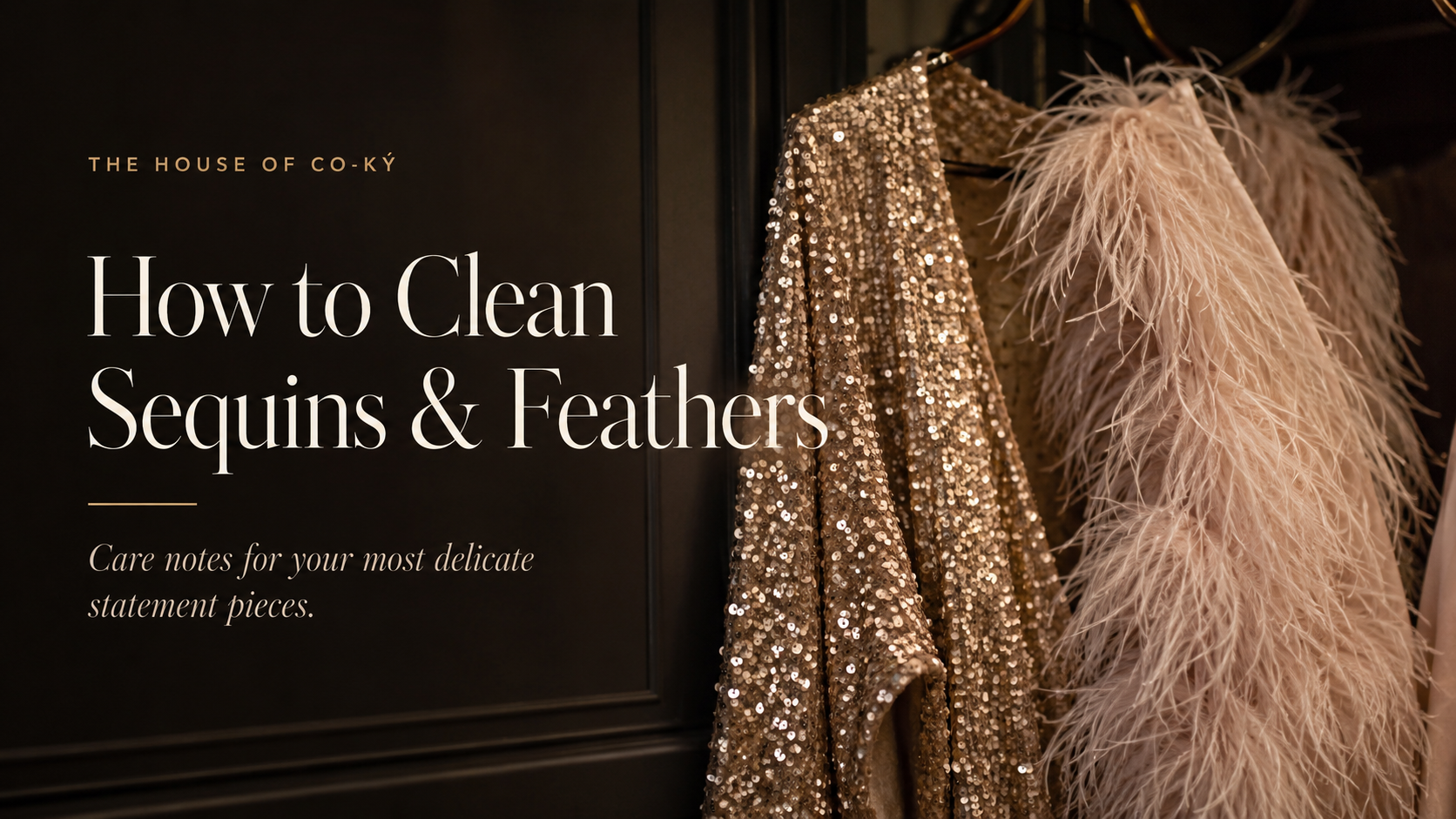
Sequins and feathers are made for the room, the photo, and the moment people ask about later. They also ask for a softer hand after the night is over. Here is how to care for your most delicate statement pieces without turning the sparkle into a cautionary tale.
Some pieces are not meant to disappear into the background. A sequin dress, a feather-trimmed mini, a shimmering top, a party-ready jacket — these are the pieces with presence. They catch the light, shift with movement, and bring the kind of texture that makes an outfit feel less expected.
They also require a little more care than your everyday favorites. Sequins can loosen, dull, or snag when handled too aggressively. Feathers can flatten, dry out, or lose their shape if they are washed or heated the wrong way. In other words: the glamour is real, but the maintenance has notes.
The sparkle can stay. The after-party evidence does not have to.
Before cleaning any delicate piece, always check the garment care label first. If the label says dry clean only, if the piece is heavily embellished, or if you are unsure about the fabric underneath the sequins or feathers, a professional cleaner is the safest route. For light odor, small marks, or gentle refreshing at home, use the care notes below with patience and a very calm hand.
What you will need
For delicate care, keep the tools simple. You will need a clean sink or basin, cool to lukewarm water, a small amount of mild dye-free detergent, a soft cloth or towel, and enough flat surface space for drying.
For feathers, a handheld steamer used carefully from a distance or a blow-dryer on a low, cool setting can help restore movement after drying. Avoid high heat, rough brushing, twisting, scrubbing, or anything that treats a statement piece like gym laundry. It will not end well.
When in doubt, test first. Choose a hidden area and check for color transfer, loose embellishment, or texture changes before cleaning a more visible part of the garment.
How to clean sequins and feathers at home
Most delicate pieces do not need an intense wash after every wear. Often, they need a targeted refresh: odor care, gentle spot treatment, and careful drying. The goal is to clean only as much as necessary while protecting the detail that made the piece worth choosing in the first place.
How to clean sequins
For light odor or general refreshing, fill a clean sink or basin with cool to lukewarm water and mix in a small amount of mild dye-free detergent until it dissolves. Turn the garment inside out if the construction allows it, then place it into the water and gently swirl. Do not scrub, twist, or rub the sequins against one another.
Let the garment soak for about five minutes. If there is a small stain, dab it gently with a soft cloth and a little diluted detergent before rinsing. Always dab rather than rub — sequins are usually attached with delicate stitching, and friction can weaken the threads or lift the embellishment.
Rinse with cool water until the soap is removed. Support the weight of the garment as you lift it from the basin, especially if it is heavily embellished.
CO-KÝ note: Sequins do not enjoy drama in the wash. Keep the water gentle, the movement minimal, and the scrubbing nonexistent.

How to dry sequined garments
Once the sequined piece has been rinsed, hold it over the sink or basin and let excess water drip away. Do not wring it out. Twisting a wet embellished garment can stretch the fabric, loosen stitching, and distort the shape.
Lay the piece flat on a clean towel and gently press with another towel to remove moisture. If the towel becomes saturated, replace it with a dry one. Allow the garment to air-dry completely while flat.
Avoid hanging the garment while it is still wet. Water adds weight, and that weight can pull the shoulders, straps, or seams out of shape. Once the piece is fully dry, then it can return to a hanger or garment bag.
Patience is part of the care ritual. A rushed dry can do more harm than the original spill.

How to refresh feathers
If the issue is light odor rather than visible dirt, begin with the least invasive option: air. Hang the piece in a well-ventilated space away from direct sunlight and let it breathe. For a soft refresh, you can place the garment in a breathable garment bag or pillowcase with a clean dryer sheet nearby, but avoid rubbing the sheet directly against the feathers.
If feathers truly need washing, proceed carefully. Most colored feathers are dyed, and dye may not be colorfast. Wash only similar-colored feathers together, use cool to lukewarm water, and test a hidden area first. Mix a tiny amount of mild detergent into the water, gently swirl the feathered area, then rinse carefully.
Handle the feathers as little as possible while wet. Wet feathers can clump and look less graceful before they are fully dry and fluffed.
CO-KÝ note: With feathers, less is usually more. Start with airing out before you reach for water.

How to dry and fluff feathers
After feathers have been lightly cleaned, let the garment air-dry in a well-ventilated area. Once the feathers are mostly dry, use your fingers to separate them gently. Do not brush aggressively.
For long, fine feathers, a blow-dryer on a low, cool setting can help bring back softness and movement. Keep the dryer moving and do not place it too close to the feathers. The goal is to lift and separate, not blast them into submission.
A steamer can also help refresh dry, tired-looking feathers, but use it from a distance and avoid soaking the trim. A little moisture can revive movement. Too much moisture can create clumping.
If the feathers look shy after drying, give them time. Gentle air, cool movement, and light finger-fluffing usually bring the drama back.

A statement piece deserves a softer hand. Care for the detail, and the detail keeps doing what it came to do.
A few things worth keeping in mind
Delicate clothing care is not about making the garment look brand new after every wear. It is about preserving the shape, texture, and finish that made the piece special. Over-washing can be just as damaging as ignoring a stain.
For underarm odor, focus on the lining or inner fabric first rather than soaking the entire garment. For makeup marks, drink spills, or food stains, spot-treat gently and as soon as possible. The longer a stain sits, the harder it becomes to lift without disturbing the embellishment.
For pieces with both sequins and feathers, follow the most delicate element. Usually, that means treating the garment as a feathered piece first: minimal water, gentle handling, careful drying, and no heat.
Do not
- Put sequins or feathers in a washing machine
- Twist, scrub, or aggressively brush
- Use hot water or high heat
- Hang heavy embellished pieces while wet
- Mix differently colored feathers in water
- Ignore the care label on complex garments
Do this instead
- Spot test a small hidden area before cleaning
- Use cool to lukewarm water and mild detergent
- Dab stains gently instead of rubbing
- Lay sequined pieces flat to dry
- Air out feathers before washing
- Use low, cool airflow to restore feather movement
How to store sequins and feathers
Once your piece is clean and completely dry, store it with room to breathe. Sequins can snag on neighboring garments, so consider turning the piece inside out or placing it inside a garment bag. Avoid overcrowding the closet; pressure can crush texture and bend embellishment.
Feathered pieces need space. If they are pressed tightly between heavier garments, the feathers can flatten and lose movement. Hang them where the trim is not being crushed, or store carefully in a breathable garment bag.
For travel, keep delicate pieces separated from zippers, beading, and heavy shoes. A soft garment bag or tissue layer can help protect the finish. Your future dinner look will thank you.
CO-KÝ Style Notes
Care notes for pieces with presence
- After a night out: Air the piece before storing it. Many delicate garments need a refresh, not a full wash.
- For sequined dresses: Dab stains gently, rinse with care, and dry flat. Never wring a wet embellished piece.
- For feather trim: Start with ventilation. If washing is necessary, test first and keep water contact minimal.
- For mixed textures: Follow the most delicate detail on the garment. Feathers usually set the rules.
- For storage: Give sequins and feathers space. Crowding is the quiet enemy of texture.
- For pieces you truly love: When the care label, fabric, or embellishment feels uncertain, choose a professional cleaner. The right find is worth protecting.
Frequently asked questions
Can you wash sequins at home?
Some sequined garments can be gently hand-washed if the care label allows it. Use cool to lukewarm water, a small amount of mild dye-free detergent, and minimal movement. Do not scrub, twist, or place sequins in the washing machine.
How do you remove odor from a sequin dress?
For light odor, turn the garment inside out if possible and gently hand-wash or spot-clean the lining with mild detergent. Rinse carefully and lay flat to dry. If the dress is heavily embellished or labeled dry clean only, use a professional cleaner.
Can feathers be washed?
Feathers can sometimes be cleaned carefully, but they are delicate and many colored feathers are dyed. Always test a hidden area first, wash only similar colors together, use cool to lukewarm water, and avoid excessive handling while wet.
How do you fluff feathers after cleaning?
Allow feathers to air-dry first, then gently separate them with your fingers. A blow-dryer on a low, cool setting can help restore movement. Keep it at a distance and avoid high heat.
Can you steam feathers?
A steamer can help refresh tired-looking feathers when used carefully from a distance. Do not soak the feathers with steam. Light moisture can revive movement, but too much can cause clumping.
When should I take sequins or feathers to a professional cleaner?
Choose a professional cleaner if the care label says dry clean only, the piece is heavily embellished, the fabric underneath is delicate, the stain is significant, or you are unsure how the dye or trim will react to water.

Written by TheHouse OfCoky



Leave a comment
This site is protected by hCaptcha and the hCaptcha Privacy Policy and Terms of Service apply.